Low iron
Common in Indian women. A simple blood test shows it, and it’s treatable in weeks.
Blood test
Low iron and a slow thyroid are two of the commonest causes in Indian women. Both show up in a simple blood test.
Hair fall has many causes, and most are treatable. We find yours, and build your plan around it.
Common in Indian women. A simple blood test shows it, and it’s treatable in weeks.
Blood test
Shedding along with tiredness or feeling cold. One blood test settles it, and treating it helps hair recover.
Blood test
Hair fall 2–4 months after illness, childbirth, surgery, a crash diet or stress. Usually settles on its own.
Your assessment
Gradual thinning at the parting, often in the family. It responds to steady, long-term care.
Doctor review
PCOS, childbirth, menopause, or starting or stopping the pill can all show in your hair.
Blood test, if needed
Flaking, itching or soreness that no shampoo has settled. Very treatable once your doctor has seen it.
Doctor review
Some tablets, too little protein, tight hairstyles or heat can all thin hair. Easy to miss, easy to change.
Your assessment
Round, smooth patches that appear suddenly. They often regrow, and we help you reach the right specialist.
Referred to a specialist
Where the scalp has gone smooth and shiny, hair won’t regrow. We help you find the right specialist for it.
Referred to a specialist
A blood test and a scalp check before anything is prescribed, so your care starts at the cause.
Not just the first call. Your plan changes as you do — your doctor checks in and adjusts it with you.
Most women see the first change around month four, and a clear picture by month seven. And we’re with you.
Sometimes the answer is rest, iron or time, not a prescription. Good news — and your doctor stays with you.
Here’s what the months look like, so you know what to expect along the way.
So real change is counted in months.
Fall quietens before new growth shows. That’s progress.
First change by month four; photos compared at month seven.
One monthly price for the doctor, the reviews and the medicines. The only thing billed on its own is the blood test.
Usually more than one thing. The most common are low iron, thyroid, thinning that runs in families, and shedding after illness, childbirth or stress. Hormones, scalp problems, some medicines and diet play a part too. They look alike in the mirror, so we check first and build your plan around what we find.
Because the plan depends on the cause. A scalp lotion can’t fix low iron, and iron tablets can’t fix thinning that runs in families. A blood test and a look at your scalp answer that early, so your plan is made for you from day one.
Hair grows at its own pace — most women see the first change around month four, and by month seven your doctor can compare photos with you and give a clear picture. Your doctor is with you the whole way.
It depends on the cause, and your doctor talks it through with you before you start. Low iron or shedding after a shock usually settle, and you stop. Thinning that runs in families needs ongoing care to hold what you have, for as long as you want to keep the gains.
Say so in the assessment. Some medicines aren’t suitable in pregnancy or while breastfeeding, and shedding after childbirth very often settles on its own. Your doctor plans around where you are.
A photo helps your doctor prepare, and it becomes part of your record. The diagnosis itself happens on your call, with your results in front of you both.
If your doctor prescribes something, we dispense it through our pharmacy partner and ship it to your door, with a note on what each medicine is for.
Your first call with a doctor is free. After that, you pay for your tests, your follow-up sessions and any medicines — and you see every cost before you say yes.
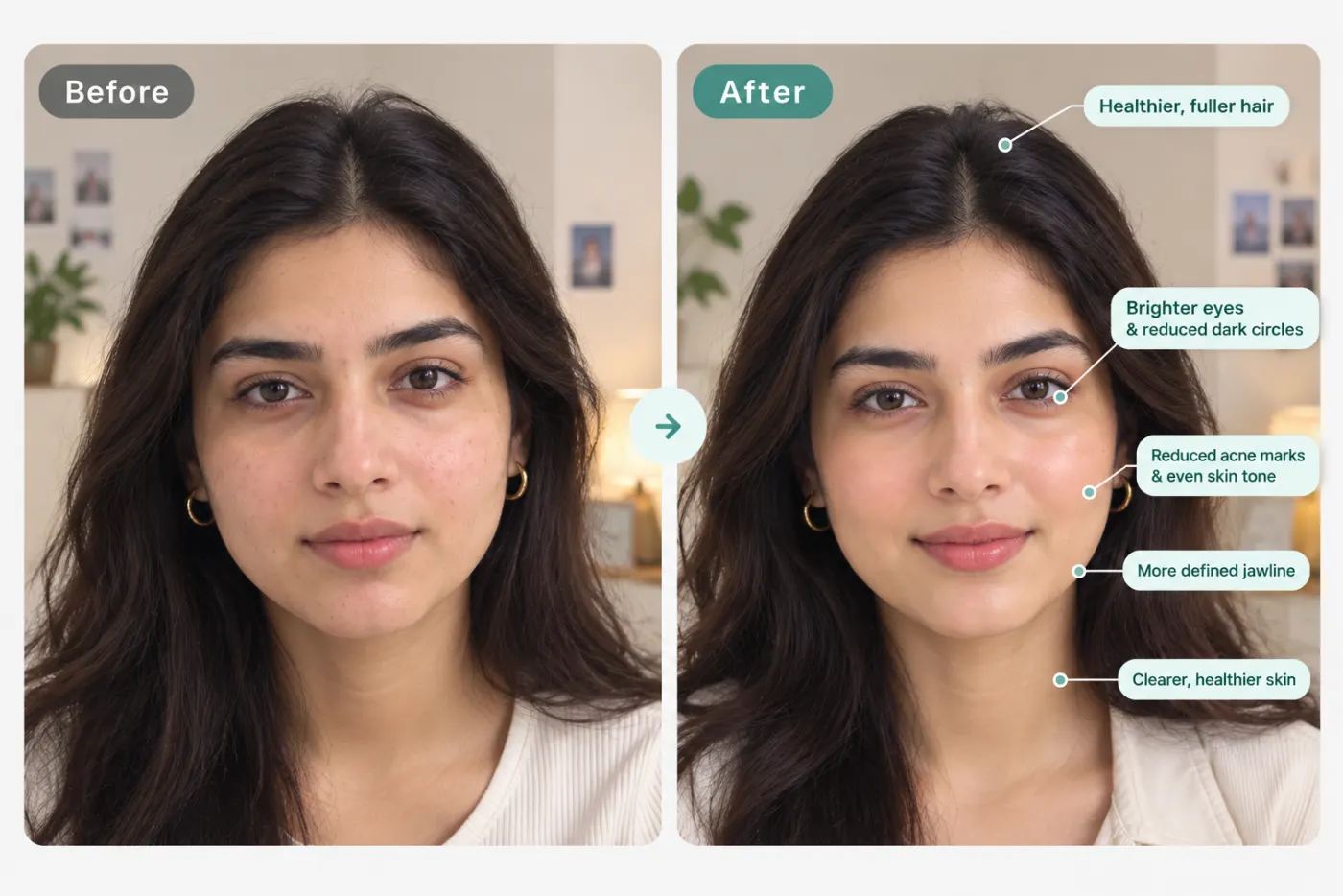 AI illustration
See fuller hair and brows on your own photo.
Try it with your cameraFree · one picture per person · AI simulation